




John 14:6: “Jesus said to him, ‘I am the way, and the truth, and the life. No one comes to the Father except through me.”
Jesus didn’t stutter when He said it.
“I am the way, the truth, and the life. No one comes to the Father except through Me.”
That sentence has probably caused more arguments, walk-aways, and church splits than we like to admit. Why is that? Well, because it sounds narrow–and spoiler alert: It’s supposed to be. It feels exclusive–and in a world that worships inclusivity, it lands.
So here’s the question we keep dodging:
Was Jesus being loving… or was He drawing a line you can’t cross?
But the real question is this:
Was Jesus telling the truth… even if it offends us?
And if He was—what do we do with that?
Jesus wasn’t posting a hot take online. He spoke the truth and knew no lies. So, if Jesus only speaks truth, it begs the question: Was Jesus being inclusive or exclusive?
Read on.
Related Article

Many have wrestled with that thought and some may not like the answer I give. So, I brought some help! My guest writer, Maury Wood, will help break this down. Thank you Maury for agreeing on this collaboration.
Not Many Doors, One Way
Maury Wood : Please reach out with any questions.
When I heard Jesus say, “I am the way, the truth, and the life,” as a kid, I never thought, Well, that seems a bit strict. It just made sense.
Now, I had the benefit of knowing how the story ends, with His crucifixion, His resurrection, and the gift of salvation. I can understand how hearing that statement without that context could sound like my way or the highway. Anyone making that kind of claim better have a very good reason.
And Jesus did.
If there were another way, through good behavior, moral effort, or religious sincerity, then the cross was unnecessary. If we could earn heaven, Jesus wouldn’t have had to come at all. Scripture is clear: salvation is by grace through faith, not works, so no one gets to boast. (Ephesians 2:8-9)
That truth hasn’t weakened for me over time. It’s grown stronger.
I recently asked my 17-year-old son how he felt about Jesus being the only way to God. I am blessed to have a direct line to this generation, and I use it a lot. Without hesitation, he said, relief.
Relief that the path is clear. Relief that the way isn’t vague or hidden. Relief that God didn’t leave us guessing.
I felt the same thing.
Jesus wasn’t making a philosophical argument when He said those words. He was sitting at a table with troubled disciples, hours before His arrest. He had just washed their feet. He had just told them one of their own would betray Him. Their world was about to come apart as they knew it.
So He started with this: “Don’t let your heart be troubled.” (John 14:1)
Thomas, confused and anxious, asked the question we all ask in one form or another: How do we know the way? And Jesus answered, I am the way. (John 14:5-6)
Not a map. Not directions. Himself.
To me, that sounds less like a threat and more like reassurance. God felt distant. He still feels distant sometimes, but Jesus introduces us. He bridges the gap. Like meeting someone important through a trusted connection, access suddenly becomes possible.
That’s why I don’t see this verse as a weapon. I see it as a signpost.
I can’t get anyone to heaven. I’m not the road. I’m not the gate. I’m just pointing to Christ, like John the Baptist. I am pointing away from myself and toward the Lamb of God who takes away the sin of the world.
The exclusivity of Jesus isn’t about shutting people out. It’s about clarity. Only is a finite word, yes, but it’s also merciful. One way means no guessing, no earning, no scrambling to measure up. The door is open to everyone, but it is still a door, and we have to walk through it.
That’s shaped how I parent. I point my kids to Jesus, not because I want control, but because I want them safe. I want them anchored. All four of them have chosen to follow Christ, and those were conversations we didn’t rush. This matters too much to treat casually. Selfishly, I want to spend eternity with my kids, not just because they’re family, but because they’re brothers and sisters in Christ.
If Jesus is the way, then lost people are either unaware of that way or have chosen not to take it. Our job isn’t to yell directions from a distance. It’s to walk with people close enough that they feel safe asking.
I’ve learned that consistency matters. If our lives contradict our message, no one will hear a word we say. And while Christians are often labeled as judgmental, I’ve noticed something interesting: when people need help, or someone to listen, Christians are usually the ones sought after. That only happens when the posture is right. We lead by serving.
Jesus doesn’t force anyone through the door. He opens it and invites. He doesn’t shove. He doesn’t drag. He asks us to take the step.
That’s why I believe His words are both exclusive and inclusive. Exclusive in truth. Inclusive in invitation.
When Jesus said, “I am the way, the truth, and the life,” I believe He was showing us the bridge across the chasm created in Eden. It’s the proof that God keeps His promises, and the assurance that the way home has a name.
And that name is Jesus.
Standing in the Doorway
I think this is where I agree and it doesn’t clash with anything Maury laid out.
Jesus was inclusive—but not in the way we’ve redefined that word lately.
He didn’t say, “Everyone’s already fine, just pick what works for you.”
Quite the opposite. He said, “Come to Me.”
That invitation was wide open. Even for:
Sinners.
Outcasts.
Religious burnouts.
People with real messes and regret.
There isn’t an entry fee or perfect resume needed to get in and that’s what many people stumble over.
So sure—Jesus didn’t open many doors. He opened one, and He stood in front of it. It was literally the hill He died on.
When Jesus said, “I am the way, the truth, and the life,” He wasn’t excluding people—He was excluding false paths. This is important because pointing someone toward a cliff and calling it kindness isn’t love. It’s negligence.
Scripture is blunt about this.
Paul mentions if righteousness could come through any other means—good behavior, moral effort, religious sincerity—“then Christ died for no purpose.” (Galatians 2:21)
If there were another way, the cross was unnecessary.
And Paul even doubles down.
He says if Christ wasn’t actually raised from the dead, then “our preaching is in vain and your faith is in vain.” (1 Corinthians 15:14)
No resurrection means no Christianity. The entire faith stands or falls on the finished work of the cross.
That’s why this message hits resistance.
“The word of the cross is foolishness to those who are perishing.” (1 Corinthians 1:18)
To the unbeliever, the cross looks weak. Some even take offense to it. A crucified Savior doesn’t fit our modern idea of power or progress. But Paul says that same cross is the power of God to those who are being saved.
So what makes the difference?
Jesus tells us plainly:
“Unless one is born again, he cannot see the kingdom of God.” (John 3:3)
Born again.
That’s the antidote:
New eyes.
A new heart.
A real relationship with Jesus,
So, this isn’t just agreeing with facts. It’s believing—not in ourselves—but in the finished work of the cross.
That’s why the exclusivity of Jesus doesn’t feel cruel to me. It feels mercifully clear.
Jesus isn’t standing at the gate and telling us to figure it out–He is the gate. And, good news! Gates don’t exist to punish sheep—they exist to protect them.
That’s what I love about Jesus’ kind of inclusivity. It doesn’t lie to you or leave you wandering. It draws a line in the sand.
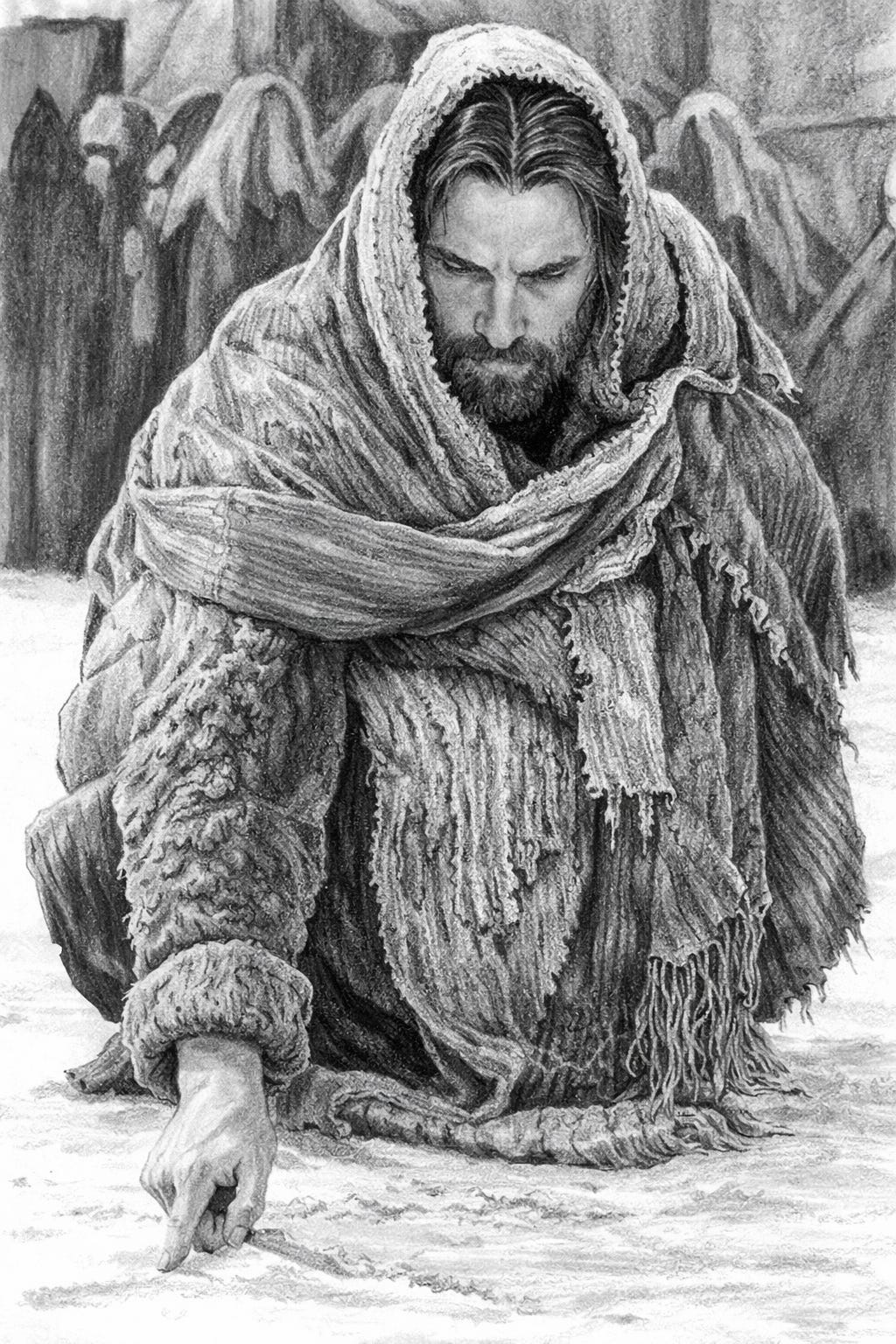
Lastly, and most importantly, it points us to the Lamb of God who bore our sins, took our punishment, and made a way where there was no way.
There is only one way. One cross. One savior.
So was Jesus inclusive or exclusive?
He was exclusive in truth—there is one way—but radically inclusive in invitation, because that way is open to anyone willing to come.
Join Our Subscriber Chat
If you’re walking this battle and need a safe space to talk, pray, or find encouragement—join our Subscriber Chat on Substack.
We pray, talk honestly, and remind each other that freedom in Christ is possible.

Christian Hotline & Prayer Support
If you’re struggling or need someone to pray with you, please reach out:
National Suicide & Crisis Lifeline: Dial 988
Focus on the Family Prayer Line: 1-877-771-4357
The 700 Club Prayer Line: 1-800-700-7000
Chatnow (24/7 Christian Chat & Prayer):
https://chatnow.org
Call to Repentance
If you’ve been trying to earn your way into heaven, it’s time to stop striving and start surrendering. Today can be the day everything changes.
The Bible says in 2 Corinthians 6:2, “Behold, now is the accepted time; behold, now is the day of salvation.”
Don’t wait for a better moment. Turn from your sin, believe in the finished work of Jesus Christ on the cross, and receive the gift of eternal life.
He is calling—respond to Him today.
Call to Action
If this message spoke to your heart, don’t keep it to yourself.
Share it with someone you love — and make sure to subscribe so you never miss more biblical truth, encouragement, and hope.
Let’s walk this journey of faith together.
© 2026 The Narrow Path Collective. All Rights Reserved.
Restack if it helped you. Please don’t copy and paste it elsewhere. If you quote it, credit and link back—thank you.

When I first read Jesus' words, I was surprised by how harsh He spoke. His words are not harsh, however. He makes a clear distinction between the world and the Kingdom. It's clear guidance, and it's up to us to follow Him.
Before Him, I thought I was spiritual. I spoke to God all the time. At least my idea of what God was. Every time I felt like God was close, something would happen and I felt like God was far away again. It was the carrot and stick routine.
Jesus, by His words, showed me that I had a lot of sin in my life that I was unaware of. By my sins, I could not have a true relationship with our Heavenly Father. God is too good and pure, and I was defiled.
I now feel God's presence in every moment. Jesus is the Way, the Truth, and the Life. There is no other way.
This is an amazing profound article of His truth filled wisdom!!
I love how the Lord’s spirit moved through you both to write the article of truth based on your personal experiences aligning it up with His scriptures of truth bringing the road of inclusivity and exclusivity together as One!
Thank you for your obedience to serve and glorify the Lord!
I hadn’t thought about a deeper love towards others beyond the relationship status—husband, friend, mom…BUT they are a child of God, a brother or sister n Christ even if they are still not turned towards the Lord, He has a deeper purpose for me in their lives. My actions will either encourage or discourage. Am I abided in His love or the love of the world! Wow 🤯
“Relief that the path is clear. Relief that the way isn’t vague or hidden. Relief that God didn’t leave us guessing.”
“Gates don’t exist to punish sheep—they exist to protect them.”
So was Jesus inclusive or exclusive?
He was exclusive in truth—there is one way—but radically inclusive in invitation, because that way is open to anyone willing to come.